Como se menciona en el último artículo de Hernando de Soto, La Disyuntiva Colombiana: Los Terroristas o Sus Ciudadanos, aquí está la historia de cómo el Perú venció al terrorismo. Descargar PDF. Read More
The Global Award for Entrepreneurship Research is the most prominent international award in entrepreneurship research with a price sum of EUR 100,000.
De Soto’s analyses have had tremendous influence on policy throughout the world and were a main source of inspiration for the World Bank’s Doing Business program.
Read More
Hernando de Soto
Peru
Institute for Liberty and Democracy
For developing a new understanding of the institutions that underpin the informal economy as well as the role of property rights and entrepreneurship in converting the informal economy into the formal sector.
Read More
Q&A with economist Hernando de Soto Polar It is not every day that a world-renowned economist touches down on Lebanese soil,but it should not surprise that such a formidable economist could deliver a presentation less than 24 hours after arriving in Beirut for the first time in his life. It might be expected that he would start with an exercise in affinity, by saying nice…Read More
Former US President Bill Clinton has described Hernando de Soto as “the world’s most important living economist.” Mr. de Soto visited Sweden in May 2017 to receive the Global Award for Entrepreneurship Research. In this pod he takes the listeners into the world where he grew up and tells us why he returned to Peru to start his today renowned think tank the Institute for…Read More
Hernando de Soto se reunió con 2,000 dirigentes de los Comités de Autodefensa (CADs) del Perú en Huanta-Ayacucho durante la tercera semana de diciembre. El economista sostuvo que, mientras el terrorismo tiñe de sangre al mundo, en nuestro país vivimos en paz gracias a los CADs, quienes fueron los verdaderos artífices de la derrota del terrorismo en el Perú. De Soto sostuvo que una gran solución a la problemática…Read More
Formed by The Bitfury Group in collaboration with Covington - Major Launch Event Will Bring Together Global Leaders and Innovators: SAN FRANCISCO, CA – January 4, 2017 – The Bitfury Group, the leading global full-service Blockchain technology company, announced today that in collaboration with international lawfirm Covington, it is launching the first ever Global Blockchain Business Council (GBBC) around the World Economic Forum 2017 Annual Meeting…Read More
The country of Georgia will introduce Blockchain technology in 2017 to enable citizens store and receive real estate extracts according to a report in Caucasus Business Week. Minister of Justice Tea Tsulukiani told the Business Contract.
Read More
›‹
1
2
3
4
5
6
7
8
The ILD
The Institute for Liberty and Democracy (ILD), led by Peruvian economist Hernando de Soto, works with developing countries to implement property and business rights reforms that provide the legal tools and institutions required for citizens to participate in the formal national and global economy. ILD works toward a world in which all people have equal access to secure rights to their real property and business assets in order to pull themselves—and their countries—out of poverty.
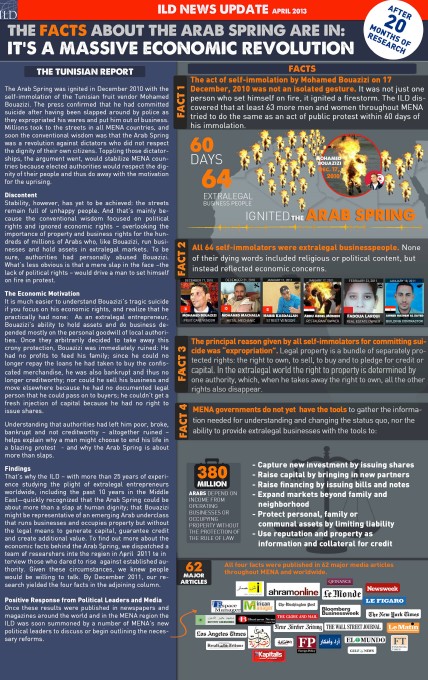
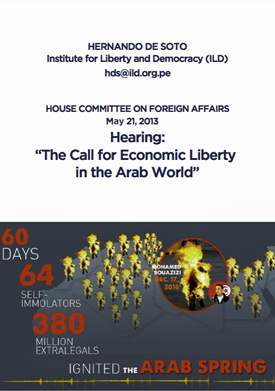
The Arab Spring Strategy is the result of the ILD's extensive research in the Middle East and North Africa (MENA) —diagnosing the size of their extralegal markets and the means by which the entrepreneurial poor are repressed and legally excluded.
We began to reformulate the strategy in January 2011 to accommodate our findings that the Arab Spring had economic roots: millions of people took to the streets to challenge the status quo —inspired, according to our research, by the more than 63 informal entrepreneurs who had protested their economic repression by lighting themselves on fire within the first two months of Mohamed Bouazizi's tragic self-immolation.
The ILD's take on the economic roots of the Arab Spring, published in The Financial Times, Wall Street Journal, and Foreign Policy —and then picked up by the MENA media— has generated a quick response from leaders in the region. Since December 2011, the ILD has been discussing various reform strategies and solutions with different Egyptian leaders, including updating and implementing the property reform proposals we made to Egypt in 2004. The government of Algeria invited the ILD to prepare a “White Paper” assessing Algeria's informal economy and elaborating recommendations —based on an ILD comprehensive Diagnosis. In Tunisia we will do the same.
Below some of our findings.
Info-graphic summarizing our findings
Click on the images for an enlargement or PDF file
The Knowledge Crisis Strategy refers to balance sheets and other property documentation institutions that have been severely damaged over the past 15 - 20 years in the US and Europe — and, according to our analysis, underpins the current recession.
Some of these institutions, which endow the global market with a collective public memory, have ceased to produce the verifiable knowledge required for the large-scale market to work.
This crisis provides preliminary evidence that when property documentation fails to produce verifiable knowledge, even the world’s richest economies will suffer. After studying for several years (2008 - 2012) what really went wrong in the US and Europe —and listening to assertions that documenting financial transactions could not be done or would take more than a decade to achieve— we began investigating what a new strategy for building property documentation institutions should be. Below some of our published findings.
Articles on the Knowledge Crisis
(Click on the logos for a PDF version of the articles)
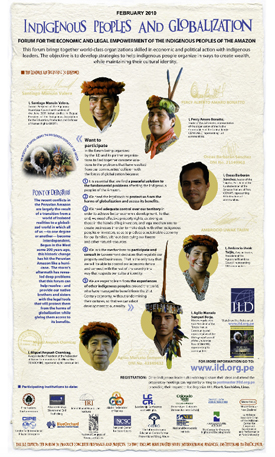
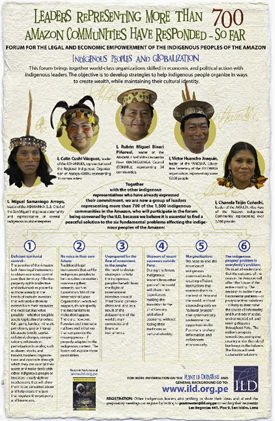
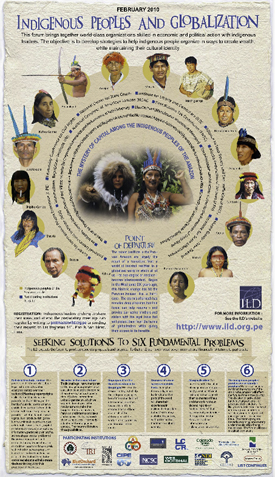
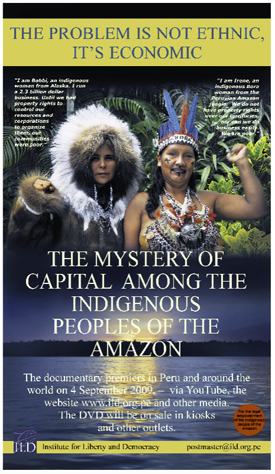
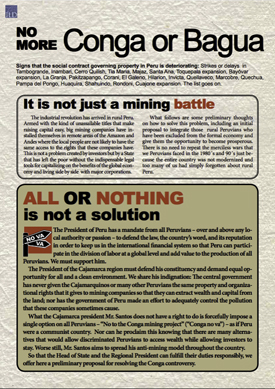
The Avatar Myths Strategy refers to the growing conflicts in remote areas of emerging markets —e.g. the Peruvian Amazon and the Andes as well as Africa and India— principally over control of oil, gas, and mining activities as well as large tracts of agricultural land.
The conflicts are typically between local, poor or indigenous communities with informal customary rights to their land and formal investment companies with government concessions to exploit the value of the natural resources available there. (See also: The Blockchain, Bitcoin, & Property Rights Project)
This new strategy of the ILD's property paradigm includes a series of steps that will allow us to assist governments faced with such conflicts to standardize indigenous and informal agreements, maps, titles, and other varieties of informal documentation and symbols in such a way that these peoples can work within the market and defend their interests —without losing their customs or identity.
The Amazon is not Avatar
(Click on the images for a PDF document or enlarged image)
Since the mid-1990s until 2008, nearly everyone in the Third World seemed to agree: markets and the rule of law were time-tested solutions to create prosperity for everyone, including the poor. To this worldview the ILD added its own breakthrough property paradigm: for real sustainable economic growth to occur and for the rule of law to gel, widespread property rights were more important to development than suspected.
For the ILD, the laws and records that document property arrangements generate the economic facts humans need to control, share, and combine them to produce higher valued combinations. Property documentation also helps organize human relationships. Without well-documented property rights, for example, peaceful relations between neighbors are difficult to sustain.
Good property documents should not just disclose who owns what but also how people and their assets can be joined in more valuable aggregations. Like the nails of a house, such documents make property rights possible. Today, we take the joining role of nails for granted; but, as US settlers moved West in the 19thCentury, they would burn down their log houses just to recuperate the nails, which were scarcer than wood and therefore more valuable. Thanks to the increasing influence of the ILD’s property rights paradigm, public housing authorities worldwide who once specialized only in delivering housing to the poor have recognize that property rights can turn mere dwellings into valuable real estate.
In fact, the ILD’s property rights paradigm has revolutionized development economics. Customizing the paradigm to solve the problems of different countries has produced major policy and regulatory changes, from land records in the Philippines to the World Bank’s popular “Doing Business” series. Such successes have spread the ILD message and influence around the world.
Gradually over the past few years three kinds of problems appeared around the world that we translated into three strategies stemming from the ILD's property rights paradigm that we have labeled: "The Arab Spring", "The Avatar Myths", and the "Knowledge Crisis".