• youtube
  • twitter
  • google plus icon
  • facebook
  • logo linkedin

Success Stories

Municipal operating license

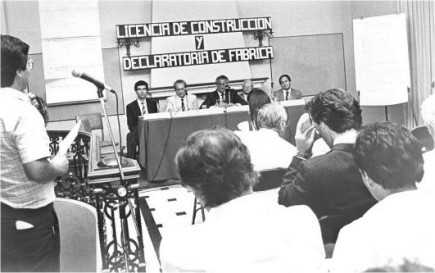
Most of the obstacles to creating a new business in Peru occur at the national level, and the Unified Business Registry was aimed at wiping them out. But there is another level of bureaucratic obstacles presented by municipal governments that operate independently of the national government. To deal with those obstacles, the ILD proposed in May 1990 to all of Peru’s municipalities a public ordinance for simplifying the granting of municipal operating licenses. This ordinance is also based on the ILD’s four pillars of administrative simplification.

The poor are also victims of a slow and onerous criminal justice system. In 1990, ILD research revealed that 13,595 prisoners —75% of the prison population— had not been tried. Worse, many of these prisoners had already served jail terms that were longer than those set by law for the crimes they had allegedly committed.

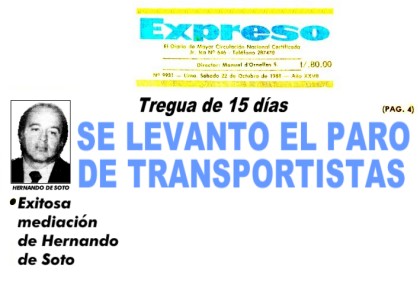
Until the 1980s, independent transport operators in Peru, who were primarily from the nation’s lower income groups, had a negative public image. Almost all proposals seeking to regulate public transportation sought to eliminate them. The presiding theory was that the poor could not become entrepreneurs and only government could (or should) run public transport. In November 1986, however, the publication of De Soto’s book The Other Path, based on years of ILD field work and analysis, revealed a different picture: 85 percent of Lima’s urban transportation belonged to extralegal entrepreneurs and the total replacement value of their fleet was US$ 620 million. Most of Lima was literally travelling through the city in extralegal vehicles. The ILD’s analysis also revealed that for decades government had put in place numerous legal obstacles impeding private lower income entrepreneurs from gaining direct legal access to the urban transportation market.

In an exclusive interview the night before his election as President of Peru on June 10 1990, Alberto Fujimori identified his constituency: “The truly marginalized Peruvians are the informal people, that large sector of the population that Hernando de Soto studied in his book The Other Path, which I read some time ago. It was then that I realized that it is they who are the great new Peru.” In fact, just 22 days earlier, Fujimori had published his government program 50 percent of which was based on ILD proposals for reform.

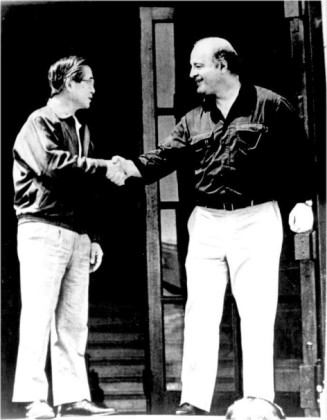
Fujimori and Hernando de Soto

De Soto agreed, provided Fujimori accept two non-negotiable conditions: The return to electoral democracy, and the implementation of the ILD’s version of the democratic decision-making law, including the initiative for referendum and the independent ombudsman, that the President had approved a few months before until he bent to conservative pressure.

 After four days of negotiations, Fujimori accepted. A new window to carry out fundamental democratic reforms in Peru had been opened.

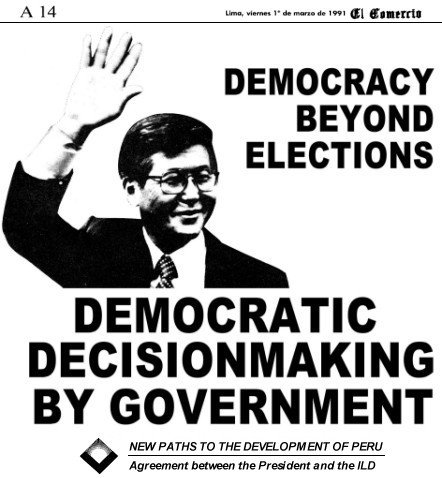
After years of research, the ILD began to understand that in Peru democracy had essentially been reduced to the act of voting. Because voters have no mechanisms at their disposal to register their reaction to new laws or policies, and the authorities do not have peaceful and organized means to gather public opinion or to channel existing initiatives by citizens, political participation ends at the ballot box. Peruvians thus hand over a virtual “blank check” to their elected officials, who, in turn, convert this check into thousands of laws and decisions that significantly affect the life of the people —without consulting or being accountable to them. And so, even when politicians govern with the best interests of the electorate in mind, they do so in ignorance and on the basis of biased information provided by those with special access to power.

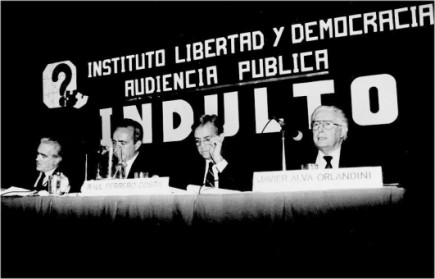
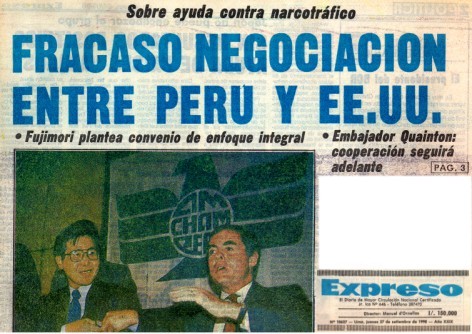
On September 26, 1990, two months after assuming power, President Fujimori informed the public —and the US Ambassador— that the Peruvian government would not renew its anti-narcotics agreement with the US. At the time, there was a strong sentiment among the nation’s opinion makers that though disapproval of drug trafficking was high, Peru was being forced to fight a US war on Peruvian soil.

ILD carried out several studies on the underlying causes of the Arab Spring throughout the MENA region. The preliminary findings for Tunisia were presented in Tunis in December 2012

From 2004 to 2006, the ILD conducted an in-depth real estate and business diagnosis and identified the 67 most important bottlenecks in the legal system.

Contact Us
P.O. Box 18-1420  
(511) 222-5566