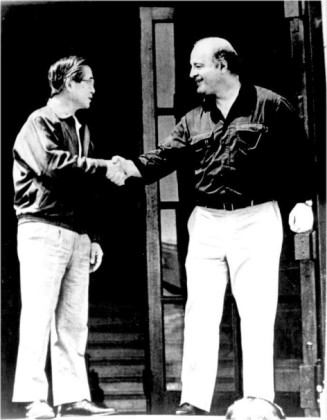
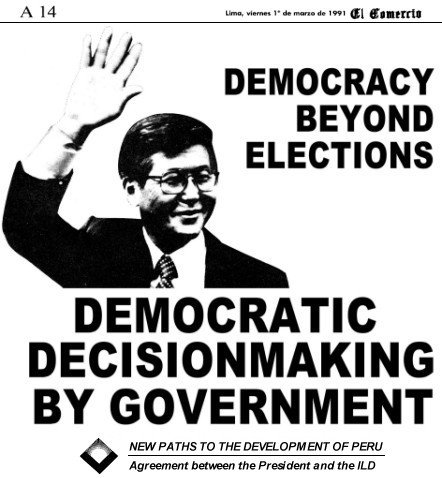
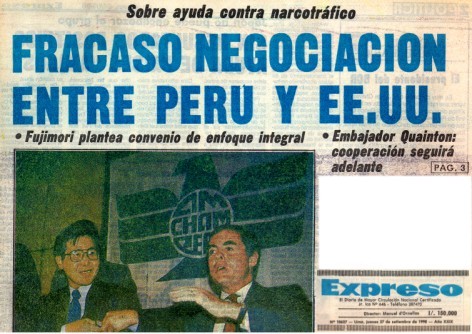
De Soto agreed, provided Fujimori accept two non-negotiable conditions: The return to electoral democracy, and the implementation of the ILD’s version of the democratic decision-making law, including the initiative for referendum and the independent ombudsman, that the President had approved a few months before until he bent to conservative pressure.
After four days of negotiations, Fujimori accepted. A new window to carry out fundamental democratic reforms in Peru had been opened.
Read more: Picking up after Fujimori’s 1992 Coup
After years of research, the ILD began to understand that in Peru democracy had essentially been reduced to the act of voting. Because voters have no mechanisms at their disposal to register their reaction to new laws or policies, and the authorities do not have peaceful and organized means to gather public opinion or to channel existing initiatives by citizens, political participation ends at the ballot box. Peruvians thus hand over a virtual “blank check” to their elected officials, who, in turn, convert this check into thousands of laws and decisions that significantly affect the life of the people —without consulting or being accountable to them. And so, even when politicians govern with the best interests of the electorate in mind, they do so in ignorance and on the basis of biased information provided by those with special access to power.
Read more: Efforts to Democratize Rulemaking